Recycling and Sustainability at Landscaping Barbican
 At Landscaping Barbican, sustainability is built into the way every garden and outdoor space is planned, maintained, and refreshed. Our approach to landscaping in Barbican focuses on reducing waste, reusing materials wherever possible, and choosing practical methods that support a cleaner local environment. From soil and green waste to packaging and hard landscaping offcuts, we aim to keep recyclable materials in circulation and out of landfill. A key part of that commitment is working toward a minimum recycling percentage target of 85% across suitable project waste streams, with continued improvement year on year.
Recycling for Barbican landscaping projects is shaped by the wider city approach to waste separation. In nearby boroughs, mixed recycling is handled with careful sorting so that paper, cardboard, plastics, metals, and glass can be processed efficiently, while organic material is typically separated for composting or anaerobic treatment. Our teams mirror that mindset on site by separating green waste, soil, timber, metals, and inert materials into clearly managed groups. This helps make sure reusable items are recovered, and it also makes the disposal chain more transparent and responsible.
We also pay attention to how materials are loaded, stored, and transported. By pre-sorting waste before collection, landscaping waste recycling in Barbican becomes more efficient and less dependent on multiple handling stages. That means fewer contaminated loads, better recovery rates, and lower environmental impact overall. Even small steps, such as collecting reusable aggregates separately or keeping plant pots and wrappers out of organic waste, contribute to a better recycling result.
 A strong local recycling system relies on the right facilities, so we work with nearby transfer stations and licensed waste facilities that support responsible processing for the central London area. These local transfer stations help consolidate green waste, rubble, and mixed construction materials before they are sent onward for sorting, reuse, or treatment. By choosing shorter travel routes and established facilities, recycling for Barbican landscapers is more efficient, with less vehicle mileage and reduced emissions compared with less direct disposal methods.
Where suitable, wood chips and garden trimmings are directed toward beneficial reuse, and stone, soil, and concrete are assessed for recovery through approved channels. This practical handling of waste is especially important in dense urban settings, where space is limited and every load needs to be managed carefully. In a busy borough context, the emphasis on separation at source helps reduce contamination and makes it easier to recycle materials such as clean cardboard packaging, metal fixings, and surplus topsoil from planting jobs.
 Alongside recycling, Landscaping Barbican sustainability includes a strong charity partnership ethos. Reusable materials from garden clearances, such as terracotta pots, hand tools, timber offcuts, and intact decorative pieces, may be set aside for local charities, community growing groups, and social reuse initiatives where appropriate. This gives a second life to useful items and supports community projects that value low-cost, practical resources. In many cases, what is no longer needed on one site can become a helpful resource elsewhere, extending the useful life of materials that might otherwise be discarded.
Our environmental approach also includes low-carbon transport. We operate low-carbon vans for many day-to-day journeys, choosing cleaner vehicles where possible to reduce emissions during travel between jobs, transfer stations, and supply points. In an area where access, parking, and congestion all affect logistics, efficient route planning matters as much as vehicle choice. Using lower-emission vans supports a more sustainable service and fits with the wider goal of reducing the carbon footprint of Landscaping Barbican recycling activities from start to finish.
We also look for opportunities to minimise the amount of waste created in the first place. That includes ordering materials accurately, reusing protective coverings when safe, and selecting durable products that last longer in outdoor conditions. For planting work, we favour compost-rich soil amendments where possible, and for hard landscaping we look for reclaimed or recycled materials that reduce demand for virgin resources. These decisions help keep the recycling process meaningful, because the best waste is often the waste that never needs to be created.
Recycling in Barbican is not just about disposal; it is about thoughtful handling at every stage of a project. From separating green cuttings for composting to diverting clean aggregates and timber from landfill, our team works to make sustainable choices routine. This includes understanding local borough practices around waste separation, maintaining clear sorting areas on site, and using approved channels for materials that need specialist processing. The result is a practical, well-managed system that supports both environmental responsibility and high-quality outdoor work.
 As part of our commitment to improvement, we regularly review recycling performance against our 85% target and look for new ways to increase recovery rates. That may involve refining site segregation methods, improving packaging take-back where available, or increasing reuse opportunities through charity links and material donation pathways. For Barbican landscaping recycling, success is measured not only by how much is diverted from landfill, but also by how effectively resources are conserved across the full lifecycle of each project.
We are also mindful of the role that local authority collection systems play in the broader recycling picture. In central London boroughs, the separation of food waste, garden waste, dry mixed recycling, and residual waste helps create a more reliable recycling stream. Our work aligns with those principles by keeping waste streams clean and easy to process. Whether it is segregating leaf litter, collecting metal fixtures separately, or ensuring that soil and rubble do not mix with recyclable packaging, the aim is always the same: better recovery with less environmental impact.
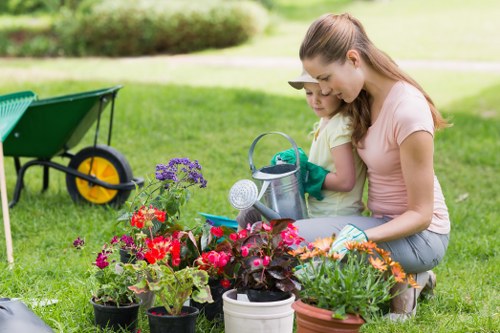 For clients choosing Landscaping Barbican, sustainability is part of the service rather than an optional extra. By combining local transfer station use, charity partnerships, low-carbon vans, and disciplined waste separation, we help create outdoor spaces with a lighter footprint. The result is a more responsible approach to landscaping in the Barbican area, one that supports cleaner streets, reduced landfill dependency, and a stronger culture of reuse and recycling across the neighbourhood.