Health and Safety Policy for Landscaping Barbican
 Landscaping Barbican services are carried out with a clear commitment to health, safety, and responsible working practices. This policy sets out the standards expected from all personnel involved in garden maintenance, soft landscaping, planting, turfing, pruning, clearing, and related outdoor tasks. The aim is to protect workers, clients, visitors, and the public while ensuring that every project is completed safely, efficiently, and with care for the environment.
The company recognises that landscaping activities can involve manual handling, sharp tools, machinery, uneven surfaces, weather exposure, and interaction with plants or materials that may cause injury. For that reason, our approach to landscaping in Barbican places prevention at the centre of every task. We believe incidents are avoidable when risks are identified early, controls are applied consistently, and everyone understands their responsibilities. Safety is not treated as a separate step; it is built into planning, supervision, and daily work routines.
All work is planned with a risk-based mindset. Before commencing any job, relevant hazards are reviewed, including site access, ground conditions, traffic movement, noise, dust, lifting requirements, and the presence of the public or other contractors. Where necessary, safe systems of work are introduced, and tasks are adjusted to reduce exposure to avoidable danger. This applies equally to small domestic projects and larger commercial landscaping operations.
Staff competence and training are essential to our health and safety performance. Everyone carrying out landscaping duties must be trained to use equipment correctly, recognise hazards, and follow site rules. Training includes safe lifting, correct use of hand tools and powered equipment, hazard reporting, emergency response, and basic awareness of plant-related risks. Supervisors are responsible for making sure workers are fit for the task, properly briefed, and supported by suitable procedures.
Personal protective equipment is issued and used according to the work being performed. Depending on the task, this may include gloves, protective footwear, eye protection, hearing protection, high-visibility clothing, and weather-appropriate clothing. PPE is considered a final layer of control, not the main defence. Where possible, risks are reduced by choosing safer methods, maintaining equipment, and organising work areas effectively. Good housekeeping is maintained at all times so that slips, trips, and falls are minimised.
 Equipment used for landscaping services in Barbican must be inspected before use and maintained in safe working order. Defective tools or machinery are removed from service immediately until repaired or replaced. Guards, safety devices, and instructions must never be bypassed. Fuel, batteries, blades, and other potentially hazardous items are stored and handled correctly. Only trained and authorised personnel may operate mechanical tools or machinery, and work must stop if conditions become unsafe.
Environmental and weather conditions are a major factor in outdoor safety. Wet ground, heat, cold, strong winds, and poor visibility can all increase the chance of accidents. Tasks are rescheduled or adapted where necessary to protect workers from excessive exposure. Drinking water, rest breaks, and appropriate clothing are provided or encouraged in line with the task and conditions. Particular care is taken when working near roads, paths, boundaries, or any area where members of the public may be passing.
Plant handling and site materials also require careful control. Soil, mulch, gravel, timber, paving materials, and containers can create lifting and storage hazards if not managed correctly. Manual handling assessments are completed when loads are heavy, awkward, or repetitive. Team lifting is used where appropriate, and mechanical aids are introduced whenever they improve safety. Where plants, fertilisers, or treatments are used, workers follow product instructions and avoid unnecessary exposure to skin, eyes, and breathing zones.
In the middle of every project, the team reviews progress and checks whether controls remain effective.  This includes making sure walkways stay clear, waste is removed promptly, and barriers or warning signs remain in place where needed. If the nature of the job changes, the risk assessment is updated and the method of work is revised. This flexible approach supports safe delivery across varied Barbican landscaping assignments without reducing standards.
Emergency preparedness is an important part of our policy. Workers are expected to know how to respond to injury, equipment failure, fire, spillages, or other urgent situations. First aid arrangements are maintained, and emergency procedures are explained before work starts. Any incident, near miss, or unsafe condition must be reported quickly so that action can be taken and lessons can be learned. Prompt reporting helps prevent repeat events and strengthens overall safety performance.
Environmental care is closely linked to safe working practice. Waste is segregated where practical, recyclable materials are managed responsibly, and hazardous substances are controlled to prevent contamination or accidental contact. Noise and dust are kept to a reasonable level, and work methods are chosen to limit disruption and exposure. These measures support a safer workplace while also maintaining the quality expected from professional Barbican landscaping services.
Supervision, communication, and review are key parts of this policy. Supervisors monitor work standards, encourage safe behaviour, and intervene when unsafe actions are observed. Team members are expected to cooperate with instructions, speak up about hazards, and stop work if they believe there is a serious risk. This shared responsibility creates a strong safety culture and helps ensure that every landscaping activity is completed with care.
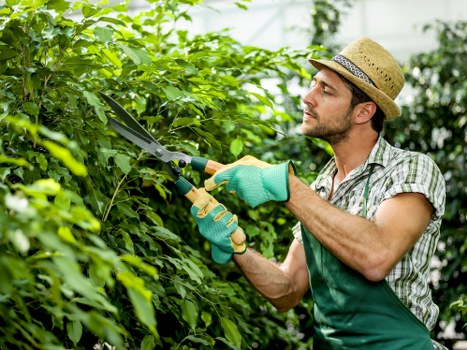 Before the final stages of any project, the team checks the site for leftover hazards such as tools, debris, exposed materials, or unstable surfaces. Temporary controls are removed only when the area is safe to hand back. Particular attention is given to secure storage, clean pathways, and the safe condition of any remaining features. This final inspection reflects our commitment to delivering dependable landscaping in Barbican with safety built into every step.
Management responsibility includes reviewing this policy regularly to confirm it remains suitable and effective. Feedback from inspections, incident reports, and operational experience is used to improve procedures. Where changes in legislation, equipment, or working methods affect safety, the policy is updated accordingly. Continual improvement is expected across all levels of the business so that health and safety standards remain current and practical.
 In the last stage of our approach, every worker is reminded that safety depends on consistent habits: planning ahead, using equipment properly, maintaining awareness, and respecting the work environment. By following this policy, the team supports a safe, professional, and reliable service across all types of landscaping Barbican projects. The result is a workplace where risks are controlled, people are protected, and quality work can be completed with confidence.