Garden drainage in Barbican
If your outdoor space keeps turning wet after rainfall, garden drainage in Barbican may be the practical fix your property needs. In an area where homes, courtyards, communal gardens, and commercial outdoor spaces can all face different water-management challenges, getting drainage right is about more than comfort. It protects planting areas, reduces slippery paths, helps lawns recover faster, and supports the long-term condition of patios, borders, and foundations nearby.
Barbican is known for its distinctive mix of architecture, paved surfaces, planted areas, and tightly planned spaces. That makes drainage problems feel more noticeable: water can pool on flat surfaces, clay-rich soil may drain slowly, and access for machinery or materials may be limited. Whether you are dealing with a soggy lawn, a waterlogged border, a flooded courtyard, or runoff that keeps creeping toward a building, a local drainage service can assess what is happening and put the right solution in place.
This page is for local homeowners, landlords, property managers, and businesses looking for reliable help with outdoor water issues. If you need drainage that works with your garden rather than against it, contact us today to discuss your space and request a free quote.
Why drainage matters in Barbican gardens

Garden drainage is often overlooked until the signs become hard to ignore. After heavy rain, you might see standing water, mud tracking into the home, moss growth, damaged turf, or plants that suddenly start struggling. In Barbican, where many outdoor areas are compact, paved, or enclosed by buildings, water has fewer places to go. That can lead to repeated saturation in the same areas and a garden that never fully dries out.
Good drainage does not just remove water. It also helps balance the whole outdoor environment. Plants get more stable growing conditions, paths become safer to use, and structural areas such as retaining walls, cellar access points, and lower-level courtyards are less likely to be affected by excess moisture. For commercial properties, better drainage can mean less disruption for visitors, tenants, and staff.
Because no two gardens are the same, effective solutions need to be designed around your site. A small Barbican courtyard will not need the same approach as a larger shared outdoor space near Farringdon, Moorgate, or Clerkenwell. The key is understanding how rainwater moves across your land, where it collects, and what can be done to channel it away efficiently.
Common garden drainage problems local properties face

Many customers contact us because the same symptoms keep returning after every downpour. Some issues are obvious, while others are subtle at first. You may notice that the grass feels soft and spongy, paving slabs stay damp long after the rain has stopped, or flowerbeds become saturated and difficult to work in. In some cases, drainage issues can also create unpleasant smells, surface erosion, or visible silt build-up.
Typical problems we see when dealing with Barbican garden drainage include:
- Standing water that remains for hours or days after rainfall
- Soil that stays heavy, sticky, or compacted
- Paths, patios, or courtyard surfaces that become slippery
- Rainwater flowing toward the property instead of away from it
- Overflow from planters, gullies, or nearby hard landscaping
- Patchy lawns caused by poor oxygen flow in the root zone
- Damage to planted areas from repeated saturation
Some of these symptoms are caused by blocked outlets or old drainage features, while others point to a design issue. For example, a garden may have been landscaped without considering local ground conditions, or earlier alterations may have changed the way water runs across the site. Identifying the cause is always the first step before any effective improvement work can begin.
Our approach to garden drainage in Barbican
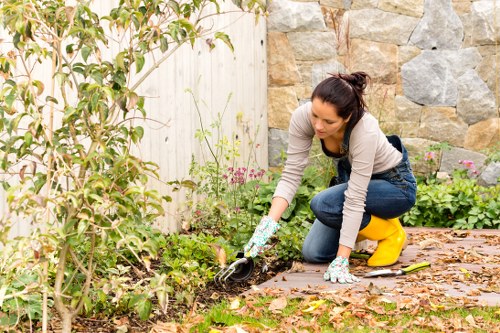
Every property starts with an assessment of how water behaves in the space. We look at slope, soil type, paving layout, nearby downpipes, existing gullies, and any areas where water is visibly collecting. In tightly developed locations like Barbican, access and working space also matter. Equipment may need to be brought in carefully, and materials may need to be handled in stages to avoid disruption to neighbours or commercial operations.
From there, the right drainage system can be selected. This may involve a simple improvement to surface runoff or a more involved installation designed to move water away from a waterlogged area. Common solutions can include:
Suitable drainage options
- French drains to intercept and redirect subsurface water
- Soakaways where ground conditions allow controlled dispersal
- Channel drains for patios, pathways, and courtyards
- Land grading or re-levelling to improve surface flow
- Gully repairs or replacements
- Perforated pipe systems for persistent wet areas
- Drainage improvements integrated with new landscaping
The best result usually comes from matching the system to the property rather than choosing a one-size-fits-all solution. A drainage system for a period-style terrace near the Barbican Estate may need careful integration with existing paving and planting, while a commercial garden or shared amenity space may require a setup that is durable, discreet, and easy to maintain.
What is included in a professional drainage service

When people enquire about drainage work, they often want to know exactly what will be done and how disruptive it will be. A well-planned service should feel clear, tidy, and practical from start to finish. The process usually begins with inspection and diagnosis, followed by installation or repair work, and finishes with testing and restoration of the affected area.
A typical service may include:
- Initial site review and discussion of the drainage problem
- Inspection of visible surface water issues, outlets, and nearby features
- Identification of likely causes, including soil and slope conditions
- Recommendation of a suitable drainage solution
- Careful excavation or access preparation where required
- Installation of drains, channels, soakaway components, or supporting features
- Testing to check water movement and performance
- Reinstatement of garden surfaces, where included in the scope
Attention to detail matters because even a well-built drainage feature can fail if it is not set at the correct level or connected properly. We focus on practical outcomes: moving water away from problem areas, preserving the look of your garden, and minimising the chance of repeat issues.
For customers with planted borders or landscaped features, we also aim to protect roots, soil structure, and decorative finishes as much as possible. In Barbican, where outdoor space is often precious and carefully planned, that respectful approach can make a big difference.
Why local knowledge matters in Barbican

Choosing a local team for garden drainage in Barbican can save time, reduce guesswork, and lead to better results. The area has a unique mix of property types and access conditions, and those details affect how a job should be approached. Courtyard gardens, raised planters, roof terraces, paved communal spaces, and basement-adjacent outdoor areas all behave differently when it rains.
Local experience is especially useful where access is limited. Narrow entries, shared walkways, parking restrictions, loading constraints, and the need to keep communal areas clear can all affect how materials and tools are brought on site. A team familiar with central London-style access challenges can plan around them more efficiently and keep disruption to a minimum.
Barbican is also close to neighbourhoods such as Finsbury, Moorgate, St Paul’s, Clerkenwell, and the City. That means many customers are managing properties that sit within busy mixed-use environments. A local drainage specialist understands the practical side of working in these settings, including timing, noise consideration, and the importance of keeping entrances, paths, and shared outdoor areas usable.
When you choose a local company, you are also choosing better responsiveness. If a problem worsens after a storm or a planned landscaping project reveals unexpected wet ground, having someone nearby can make it easier to get an assessment and move quickly toward a solution.
How drainage improvements help different types of customers
Residential gardens
Homeowners often want their garden to be usable all year round. Poor drainage can make that impossible. Children may avoid wet areas, garden furniture may be difficult to place, and even simple maintenance tasks can become frustrating. For residential customers, drainage improvements can restore outdoor space as somewhere to relax, plant, and entertain without constant muddy patches or surface pooling.
In Barbican apartments, terraces, and maisonette-style outdoor spaces, drainage may need to be especially discreet. Water must be managed without compromising the visual finish or creating issues for adjacent properties. That is why design and installation should always be tailored to the site.
Landlords and property managers
For landlords, persistent water problems can lead to complaints, higher maintenance demands, and long-term damage to external areas. Managed buildings and shared gardens often need a practical solution that reduces repeat callouts and supports safe access for tenants and visitors. A drainage system that functions properly can lower inconvenience and protect the condition of the wider property.
Commercial properties
Businesses with outdoor seating areas, service access, or landscaped entrances benefit from drainage that keeps surfaces safer and neater. In busy parts of Barbican and nearby commercial districts, standing water can affect presentation and usability. A drainage improvement can help protect first impressions while supporting daily operations.
What causes bad drainage in gardens?
There are many reasons a garden starts holding water. Some are easy to spot, while others are hidden below the surface. Understanding the cause helps ensure the solution lasts.
Common underlying causes
- Heavy or compacted soil that slows water movement
- Poor falls or incorrect ground levels
- Blocked channels, gullies, or downpipes
- Insufficient drainage provision in the original layout
- Hard landscaping that directs water into the wrong area
- Changes to neighbouring surfaces that alter runoff patterns
- Root activity or debris obstructing drainage routes
Not every wet garden needs a full installation. Sometimes a relatively small correction makes a noticeable difference, such as clearing an outlet, improving a low point, or replacing an ineffective channel drain. In other cases, particularly where water sits in the same place repeatedly, a more structured solution is needed.
It is always worth addressing the root cause rather than simply trying to hide the symptoms. Otherwise, the same problem can return after the next period of heavy rain.
Signs you should arrange an assessment
If your garden floods after moderate rain, if moss spreads quickly across hard surfaces, or if planting areas stay damp for too long, it is sensible to have the site checked. The sooner the issue is reviewed, the more options may be available.
How we work with access, parking, and site limitations
One of the biggest practical considerations in Barbican is access. Many properties are set within busy central areas, and parking can be limited or time-sensitive. Communal entrances, basement levels, service routes, and pedestrian-only sections can also affect logistics. That is why planning matters just as much as the drainage work itself.
We aim to make the process straightforward by discussing access requirements before work begins. This helps with decisions about where materials can be delivered, how equipment will be moved, and whether any work needs to be phased to reduce disruption. For larger gardens or shared spaces, a clear schedule also helps residents or staff prepare in advance.
In some cases, the best solution is also the most discreet one. Small changes to levels or careful placement of a drain can reduce the need for major landscaping disturbance. Where there is existing paving or planting to preserve, the work can often be integrated with the current layout to keep the space looking balanced.
Preparation checklist before drainage work begins
Before any garden drainage project starts, a little preparation can help the visit run smoothly and make the most of the inspection or installation time. You do not need to carry out major work yourself, but a few simple steps are useful.
Helpful preparation steps
- Make a note of where water pools after rain
- Identify any areas that must remain accessible
- Move lightweight garden furniture or pots if requested
- Clear access routes where possible
- Tell us about any previous drainage work or known underground features
- Share any concerns about shared areas, pets, or planting you want protected
If your property has communal access or management requirements, it can also help to confirm any timing preferences in advance. That is especially useful in Barbican, where neighbouring properties may be close together and work needs to be carried out with consideration.
For customers who are planning new landscaping, drainage can often be incorporated before the finishing surfaces go in. That usually gives the cleanest result and can avoid expensive changes later.
Pricing factors for garden drainage projects
Every drainage project is different, so the cost depends on the details of the site rather than a standard formula. Customers often ask what affects the price, and the answer is usually a combination of access, ground conditions, and the type of solution required.
Factors that influence the scope of work
- Size of the area affected by standing water
- Whether the issue is surface water or sub-surface saturation
- Depth and amount of excavation required
- Type of drainage system being installed
- Need to work around existing paving, planting, or structures
- Site access, parking, and material handling constraints
- Whether reinstatement of surfaces is included
Because of these variables, the most accurate approach is to arrange an inspection and request a tailored quote. That gives you a clearer understanding of the recommended solution and what is involved. It also helps avoid paying for unnecessary work or choosing a temporary fix when a more effective one is available.
If you are comparing options, ask what is included in the proposed service, how the drainage will function, and what preparation or aftercare may be needed. A good local provider should be able to explain the logic of the recommendation in plain language.
Areas we cover around Barbican
Our drainage services are available throughout Barbican and the surrounding central London neighbourhoods. This is useful for customers whose properties or managed spaces are part of a wider local portfolio or sit close to shared boundaries.
Nearby areas commonly covered
- Barbican
- Finsbury
- Moorgate
- Clerkenwell
- St Paul’s
- Smithfield
- Farringdon
- The City of London
These nearby areas often share similar access conditions, mixed property layouts, and drainage needs, especially where paved courtyards, basement levels, terraces, and planting beds are involved. If your property sits just outside Barbican but still has the same kinds of water issues, we can still help assess the site and recommend a suitable solution.
Frequently asked questions
Below are some of the questions customers often ask before arranging garden drainage work. If you are unsure whether your space needs repair, improvement, or a full installation, these answers may help you decide the next step.
Do I need drainage work if the garden only floods after heavy rain?
Possibly, yes. Short periods of standing water after exceptional rainfall can be normal in some settings, but repeated flooding or slow drying suggests a problem worth investigating. If the same area fills every time it rains heavily, drainage improvements may be needed.
Can you help with small courtyards and compact outdoor spaces?
Yes. Compact gardens, courtyards, and roof-adjacent spaces often need careful drainage planning because there is limited room to work. These sites can still benefit from effective solutions such as channels, grading adjustments, or discreet underground systems.
Will the work damage my planting or paving?
The aim is always to work carefully and protect the existing layout where possible. Some disruption may be unavoidable if excavation is needed, but a good plan reduces unnecessary disturbance and supports a tidy finish.
How long does a drainage project take?
Timescales depend on the size of the issue, site access, and the solution chosen. A small repair or surface improvement may be quicker than a full installation. During your quote process, you can discuss likely timeframes for your specific property.
Can drainage be added to a garden redesign?
Absolutely. In many cases, it makes sense to address water management at the same time as landscaping. That helps ensure new turf, paving, borders, or planting are supported by a suitable base from the start.
Is a soakaway always the right answer?
No. Soakaways can work well in suitable conditions, but they are not always the best option. Ground type, space, and the volume of water all matter. The right solution should be based on a proper assessment of the site.
Why choose a local company for Barbican garden drainage?
Choosing a local specialist is about more than convenience. It means working with someone who understands the pace, layout, and access realities of central London properties. In Barbican, drainage work often has to be done with care around neighbours, shared entrances, and tight service routes. A local team is better placed to plan with those conditions in mind.
There is also value in practical local knowledge. The way water behaves around paved courtyards, raised edges, older structures, and mixed-use spaces can vary from one street or building cluster to the next. A provider with local experience is more likely to spot the patterns quickly and recommend a solution that suits the property rather than forcing a generic fix.
If you want your outdoor space to stay usable, safer, and easier to maintain, the right drainage work can make a real difference. Whether you are dealing with a private garden, a shared courtyard, or a commercial outdoor area, it is worth getting the problem checked properly.
Book your service now or request a free quote if you are ready to improve drainage and make your Barbican outdoor space more dependable in all seasons.
What to expect when you enquire
When you get in touch about drainage problems, the goal is to make the next step simple. You can explain what you have noticed, describe where water collects, and share any details about access or previous work. From there, the site can be reviewed and the most suitable options discussed.
That first conversation is useful even if you are not sure whether the problem needs a small adjustment or a larger installation. Sometimes the best outcome comes from identifying an underlying issue early, before it causes damage to planting, paving, or nearby structures.
For customers in Barbican who want a practical, local solution, the best time to act is before the next period of prolonged rain. Contact us today to arrange an assessment, discuss your outdoor space, and move toward a drainage system that suits your property.
Helpful final note
Good drainage should feel invisible when it is working well. Your garden stays drier, your surfaces stay safer, and your planting has a better chance to thrive. That is the result most customers want, and it is exactly what a well-planned drainage service should aim to deliver.