Garden design and build in Barbican
If you are looking for garden design and build in Barbican, you are probably seeking more than a quick tidy-up or a few new plants. In a place like Barbican, where homes and commercial spaces can be compact, contemporary, and carefully planned, outdoor areas need to work hard. A well-designed garden can make a courtyard feel more usable, turn a roof terrace into a calm retreat, or bring structure and life to a small urban plot that has to do several jobs at once.
Our approach to garden design and build in Barbican is focused on practical, attractive results that suit local properties, local access conditions, and the way people actually use their outside space. Whether you are considering a complete redesign, a new planting scheme, hard landscaping, decking, lighting, or a full build from concept to completion, the right local team can help you make the most of every square metre.
Barbican has its own character: a mix of residential apartments, modern developments, shared access routes, business premises, and private outdoor spaces that often sit close to busy streets and neighbouring buildings. That means planning matters. So does coordination. And so does choosing materials and finishes that look good, cope with weather exposure, and are suitable for the space you have. That is where a local garden design and build service really adds value.
Why garden design and build matters in Barbican

In an area like Barbican, outdoor space is often limited, elevated, overlooked, or shaped by the layout of the building rather than a blank suburban plot. That makes thoughtful design especially important. A garden should not just be attractive to look at; it should feel balanced, easy to move through, and tailored to the property. Good design can create privacy, define seating and planting areas, manage storage needs, and make a small area feel much more open.
For many homeowners and landlords, the challenge is knowing where to start. Some gardens need a full reconfiguration because the current layout is awkward or tired. Others only need a smarter planting plan, new paving, better boundaries, or an upgrade to tired timber features. Commercial clients may need outdoor spaces that are presentable, low-maintenance, and durable enough for regular use. A local team experienced in garden design and build in Barbican can help turn those requirements into a clear plan.
Local knowledge matters because it affects everything from access and delivery planning to material selection and installation methods. Narrow access routes, shared entrances, lift restrictions, limited storage space, or the need to protect communal areas can all influence the build. When these factors are considered early, the project runs more smoothly and the finished space is more likely to match the original vision.
What our Barbican garden design and build service includes

Every property is different, so a good service should be flexible rather than one-size-fits-all. Our garden design and build Barbican service can be adapted for small private gardens, balconies, roof terraces, courtyards, and shared outdoor areas. Depending on your needs, the work may include both design development and construction, or just the specific elements you want to improve.
Typical elements of the service include:
- Initial site review and practical discussion of your goals
- Concept planning for layout, style, and functions
- Hard landscaping such as paving, edging, steps, and retaining features
- Soft landscaping including planting design, soil improvement, and turf or alternatives
- Decking, seating areas, planters, and screening
- Lighting for atmosphere and usability
- Water features or other focal points where suitable
- Garden structures such as pergolas, shelters, or boundary features
- Preparation and build coordination from start to finish
We also help clients who already have a design in mind but need a reliable build phase. In some cases, the project begins with a clear brief, a sketch, or reference images; in others, the space needs a more detailed design conversation before any work begins. Either way, the goal is to create a garden that feels intentional, well-made, and suited to the property.
Designing for Barbican properties
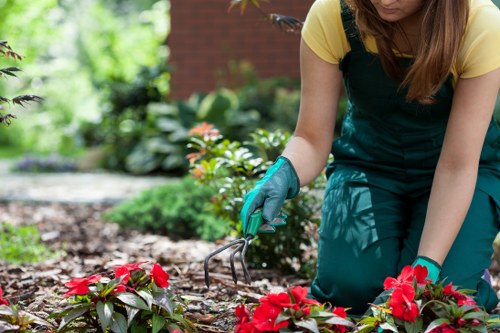
Barbican is known for its distinctive urban setting, and that often means outdoor spaces are smaller or more architecturally framed than in suburban locations. A successful garden design has to take that context seriously. A bright contemporary terrace may benefit from clean lines, large-format paving, and structured planting. A shaded courtyard may call for more texture, layered foliage, and careful attention to light levels. A roof garden may need wind-tolerant species, lightweight construction, and a design that avoids clutter.
We take time to understand how the space connects to the building. That includes doors, sightlines, windows, communal walkways, and the transition from inside to outside. When a garden is close to living or working areas, the design should complement the interior and improve everyday use. This can mean using colour palettes that feel calm and coherent, choosing materials that echo the property’s architecture, or introducing zones that make the outside space feel like an extension of the building rather than an afterthought.
In Barbican, many outdoor areas are also highly visible from neighbouring apartments or nearby walkways. That makes privacy, screening, and subtle zoning especially important. Thoughtful garden design and build in Barbican can help create a more comfortable and personal space without making it feel closed in or overdesigned.
How the process works

A well-run garden project should feel organised from the first discussion to the final detail. The process usually starts with a conversation about what you want the space to do. Some people want a peaceful retreat, others want an entertaining area, and some need a flexible space that works for children, pets, or business use. Once the purpose is clear, the practical shape of the project becomes easier to plan.
Typical project stages include:
- Initial consultation – discussing the current space, your ideas, and any constraints such as access, drainage, or existing features.
- Site assessment – reviewing levels, surfaces, sunlight, wind exposure, drainage, and access for materials and waste removal.
- Design development – deciding on layout, materials, planting style, and key features.
- Specification and scheduling – agreeing what will be built, what will be planted, and how the work will be carried out.
- Construction – carrying out the agreed build works in a tidy, controlled, and professional way.
- Planting and finishing – adding the final details that bring the scheme together.
Some clients want a full transformation, while others prefer to phase the work over time. A phased approach can be especially useful in Barbican, where access or storage limitations may make it easier to complete the project in stages. It can also help if you want to spread the work around busy periods in a household or business.
Materials and features that work well locally

Choosing the right materials is central to a successful build. In urban settings, surfaces and structures should be attractive, robust, and practical to maintain. For example, paving needs to look good in a small area without overwhelming it. Timber may suit a warm, natural style, but it should be selected with durability and maintenance in mind. Metal edging can provide crisp definition, while raised planters can improve organisation and make planting more manageable in constrained spaces.
Many Barbican gardens benefit from a clean, contemporary feel, but that does not mean everything needs to be minimal. The best designs often combine structured hard landscaping with softer planting so the space feels lively rather than stark. Shade-tolerant planting, evergreen structure, seasonal interest, and textures that hold up well in urban conditions can all help create a space that looks good year-round.
Useful features for local properties may include:
- Built-in seating for compact courtyards and terraces
- Raised beds to improve drainage, height, and planting control
- Screening panels for privacy without blocking light completely
- Low-maintenance planting plans for busy households or commercial settings
- Integrated lighting for evening use and visual interest
- Steps, level changes, or ramps where access needs to be improved
Benefits for homeowners, landlords, and businesses
Different clients want different outcomes, and a good design and build service should adapt accordingly. Homeowners often want a garden that feels like an additional room, especially when interior living space is limited. A well-planned outside area can make everyday life more enjoyable, whether that means relaxing after work, entertaining friends, or creating a small but satisfying planting scheme.
Landlords may be looking for durability, easy upkeep, and a smart finish that helps a property present well. In rental settings, the priority is often to create an outdoor area that is functional without being demanding. That can mean strong surfaces, reliable planting choices, and a layout that remains tidy with relatively low maintenance. Commercial clients, meanwhile, may need a polished outdoor area that supports brand image, staff wellbeing, or visitor experience.
Garden design and build in Barbican can also improve safety and usability. Better drainage, clearer circulation, improved lighting, and more practical surfaces can all make a space easier to use. When a garden has been poorly arranged in the past, a redesign can fix everyday frustrations and give the whole property a better flow.
What to expect from a local company
Choosing a local team is about more than convenience. It means working with people who understand the realities of Barbican properties and nearby streets, including how access, deliveries, and working hours can affect a project. It also means the team is more likely to anticipate issues that are common in urban developments, such as limited space for materials, shared entrances, restricted parking, or noise sensitivity around neighbouring homes and workplaces.
When you hire a company with local experience, you benefit from practical planning and a more responsive service. That matters during a build, because even a well-planned project may need adjustments if an existing surface is discovered to be in a different condition than expected, or if the layout reveals opportunities to improve the design as work begins. A local team can handle those decisions more smoothly because they are used to working in similar settings.
Trust is built through clarity: clear scope, clear sequencing, and clear discussion of what is and is not included. That is especially important for garden projects, where the difference between design ideas and build reality can be significant if the work is not properly planned.
Preparation checklist before your project starts
There are a few simple steps that can make your project easier and help the work begin smoothly. You do not need to have every design decision finalised before speaking with a professional, but it helps to think about how the space will be used and what problems you want to solve.
Preparation checklist:
- Think about the main purpose of the garden: relaxing, dining, planting, entertaining, play, or a mix of uses.
- Make a note of anything you dislike about the current space, such as poor drainage, lack of privacy, awkward levels, or too much maintenance.
- Gather inspiration images, material preferences, or example layouts if you have them.
- Check whether there are any building rules, access limits, or shared area arrangements that may affect the work.
- Consider whether the project needs to be completed all at once or in stages.
- Decide if you want a low-maintenance result or are happy to spend more time on ongoing care.
It is also helpful to think about future use. For example, if your needs may change over the next few years, the design can be adapted to remain flexible. A seating area may be planned so it can later accommodate planting or storage. A planting scheme may be set out so it can mature without becoming overcrowded. These practical details make a noticeable difference over time.
Pricing factors and what influences the cost
Because every outdoor space is different, it is not sensible to treat garden work as a standard package. The overall cost of a project depends on several factors, including the size of the space, the complexity of the design, the materials chosen, access conditions, and whether existing features need to be removed before the new work begins. In Barbican, access and logistics often play a bigger role than in more open suburban settings, especially if materials need to be carried through shared areas or lifted to upper levels.
Other factors that influence cost include drainage requirements, groundwork, level changes, planting quantities, bespoke carpentry, lighting, and the amount of preparation needed to create a long-lasting result. A simple refresh is naturally different from a full redesign and build. Likewise, a garden with difficult existing levels or a roof terrace with structural considerations will usually require more planning than a flat, open plot.
When requesting a quote, it helps to be clear about priorities. If you know your main goal is a usable seating area, privacy screening, and planting that is easy to maintain, the proposal can focus on those outcomes. A good local company will explain the options and help you understand where the budget will have the greatest impact.
Areas covered near Barbican
While Barbican is a distinctive location in its own right, many projects also involve nearby streets and surrounding central London neighbourhoods. Clients often live or work in neighbouring areas and want a team that can move between compact residential settings and commercial spaces with ease. This is particularly useful where access routes, parking arrangements, and delivery times need to be carefully managed.
We regularly consider projects for properties in and around:
- Barbican itself
- Farringdon
- Moorgate
- St Paul’s
- Smithfield
- Clerkenwell
- Holborn
- The City of London
- Nearby residential and mixed-use developments
If you are close to these areas and need garden design and build in Barbican, a local service can help coordinate the practicalities while keeping the project focused on your preferred style and level of maintenance.
Frequently asked questions
Can a garden be redesigned if the space is very small?
Yes. Small spaces often benefit the most from careful planning. A well-thought-out layout can make even a compact courtyard, terrace, or balcony feel more usable and comfortable.
Do I need a full design before building starts?
Not always. Some projects begin with a simple brief and evolve into a design as the practical details are discussed. Others need a more structured plan from the outset. The right approach depends on the size and complexity of the work.
How do you deal with access in Barbican properties?
Access is considered at the planning stage so materials, waste, and equipment can be managed safely and efficiently. Shared entrances, narrow routes, and parking limitations all need to be factored in early.
Can you work on both residential and commercial spaces?
Yes. The same design principles apply, but the priorities may differ. Residential clients often want comfort and character, while commercial clients may focus on durability, presentation, and low maintenance.
What if I only need part of the project done?
That is common. Many clients want a partial redesign, new paving, updated planting, or a specific feature such as screening or lighting. A flexible service can focus on the elements that matter most.
How long does a garden project take?
Timeframes vary depending on the scale of the work, the materials involved, and the site conditions. A small improvement may be relatively quick, while a full design and build project will naturally take longer. The schedule should always be discussed before work begins.
Why choose a local specialist for Barbican
There are practical advantages to working with a company that understands the Barbican area. Urban projects often require careful sequencing, quiet and tidy working, and a realistic approach to constraints. A local specialist knows that a garden design is not just about aesthetics; it is also about how the space is accessed, how materials will be brought in, where waste will go, and how to minimise disruption to neighbours or building operations.
Local experience also helps when choosing finishes. In central London settings, outdoor spaces are exposed to wind, shade, reflected light, and varying levels of privacy. That means the best solution is rarely copied from a generic layout. Instead, it is built around the building, the client’s habits, and the conditions on site. The result is a space that feels intentional rather than improvised.
For people comparing options, this kind of practical knowledge can make a major difference. When you want garden design and build in Barbican, you are choosing a service that should understand the realities of the area as well as the creative possibilities.
Book your project with confidence
If your garden, terrace, courtyard, or shared outdoor area is not working as well as it should, now is a good time to explore what is possible. A well-planned project can improve everyday use, add comfort, and make the property feel more complete. Whether you have a clear idea already or need help shaping it, a local design and build team can turn the brief into a workable plan.
From layout ideas and planting choices to hard landscaping, screening, and finishing details, the right service will help you create an outdoor space that suits Barbican living and working conditions. Request a free quote if you are ready to compare options, or contact us today to discuss the kind of garden you want to create.
Book your service now and take the next step toward a smarter, more usable outdoor space in Barbican.